What to Do in a Heating or Cooling Emergency
Jose Armas | Nov 07 2025 18:00
Why HVAC Emergencies Hit Centennial Homes Hard
Centennial homes tend to be larger, family-oriented, and heavily reliant on central heating and cooling. When a system fails here, it’s rarely a mild inconvenience — it’s a full-house problem. Whether it’s a furnace shutting down during a winter cold snap or an AC failure during a summer heat wave, HVAC emergencies in Centennial demand fast, informed decisions.
The biggest issue we see? Homeowners aren’t sure what actually qualifies as an emergency — or what to do in the critical minutes before help arrives.
Step One: Prioritize Safety Before Comfort
In any heating emergency in the Denver area, safety comes first. If you smell gas, see sparks, hear loud banging, or notice your system repeatedly shutting itself off, turn it off completely and ventilate the area if needed.
For cooling emergencies, electrical smells, water pooling near equipment, or breaker trips are signs to stop running the system immediately. Continuing to operate a failing unit can turn a repairable issue into a much larger (and more expensive) problem.
What You Should Check Before Calling for Emergency HVAC Service
There are a few quick checks that can save time — and sometimes resolve the issue entirely:
-
Verify thermostat settings and batteries
-
Check circuit breakers and furnace switches
-
Look for obvious airflow blockages or closed vents
-
Inspect filters for severe clogging
If the system still won’t run, short cycles repeatedly, or shuts down immediately, it’s time to call for emergency HVAC service in Centennial.
What a Real Emergency Response Looks Like
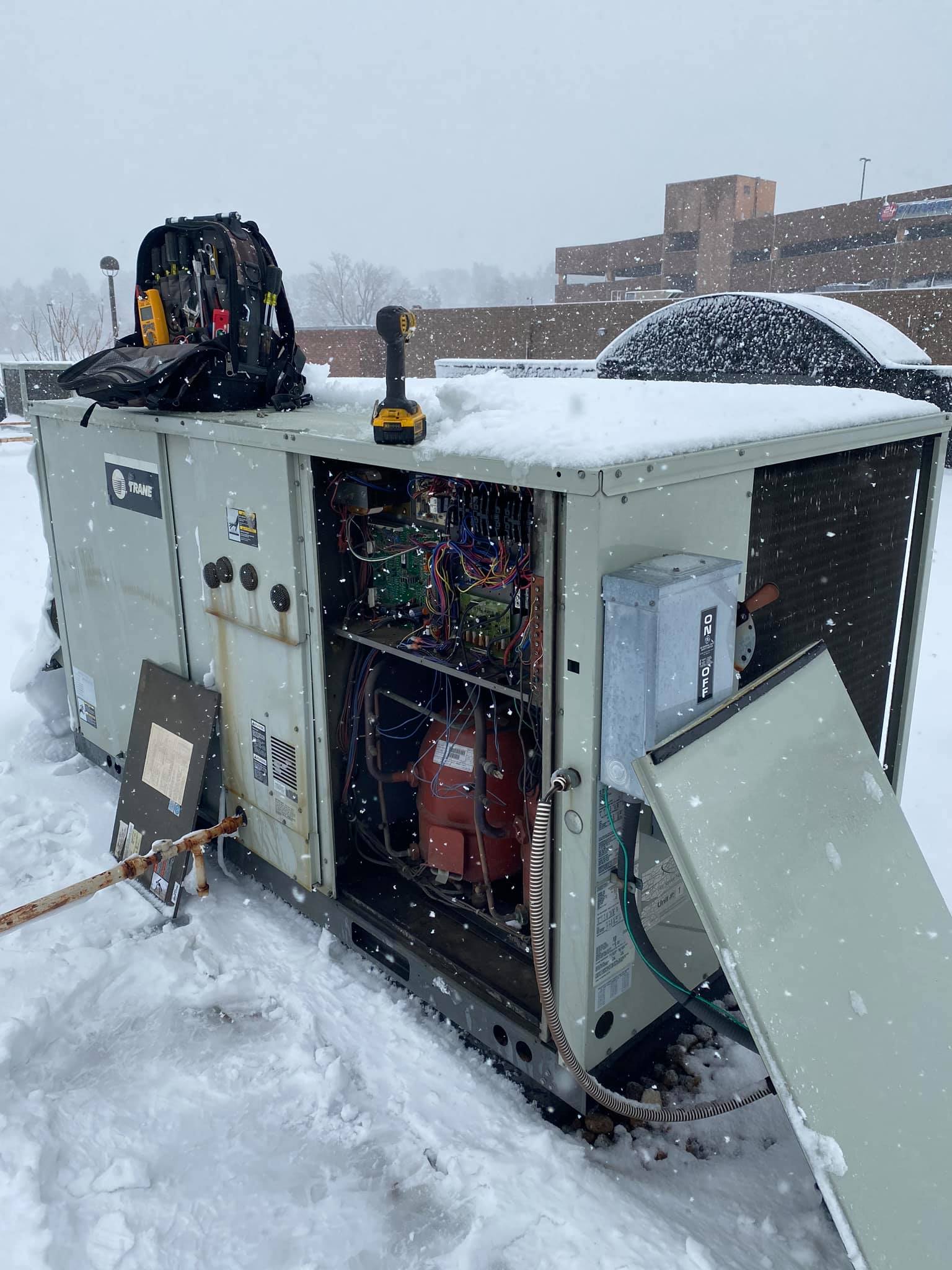
Emergency service isn’t about rushing in blindly — it’s about arriving prepared. When Right Away Heating & Air Conditioning responds after hours, the goal is to stabilize the situation first, then clearly explain next steps.
That’s the difference between emergency sales and emergency service.
Common Emergency Failures We See in Centennial
Certain issues come up again and again in this area:
-
Furnace ignition or flame sensor failures
-
Overheated systems caused by restricted airflow
-
Frozen or cracked drain lines in winter
-
AC capacitor failures during peak summer heat
-
Electrical issues from aging components
Most of these problems give warning signs weeks or months ahead — if someone knows what to look for.
How to Reduce the Risk of Future Emergencies
The majority of emergency calls could have been prevented with routine maintenance. In Centennial homes especially, preventative service helps:
-
Identify failing parts before peak demand
-
Keep safety controls functioning properly
-
Maintain consistent airflow and efficiency
-
Reduce system strain during extreme temperatures
Emergency service should be a last resort — not a seasonal routine.
What to Expect When You Call Right Away Heating & Air Conditioning
When you call 720-646-1962, you’re not routed to a call center or sales script. You’re connected to a local team that understands Centennial homes and responds with practical solutions.
We explain the issue clearly, present repair options honestly, and prioritize getting your system safely operational.